
Tuesday, May 25, 2021
EYE DID IT AGAIN
Because I'm home most days, I give my right eye a break and take my prosthetic eye out. Some times several days at a time. About three months ago I went to Target for the first time in months. Later that day I had plans for the evening and while getting ready I looked in the mirror, oh no, my fake eye was out. This was the first time in almost 18 years of wearing a fake eye. Thankfully I only talked to one person which was the pharmacy tech. Yesterday my husband and I went to Kroger which was very busy. When we were home realized I had done it again. Out in public with only one eye. 

Friday, August 9, 2019
FLASHLIGHTS
Flashlights have helped me so
much from walking the dog at night to finding things I've dropped. I've bought
so many over the years as my vision changed. I've left the house and realized
my shoes are black when my dress is blue or wore black socks with blue shoes
and pants. My brother bought a great flashlight for my dad who bought the same
one to give my siblings. it's a NEBO Slyde King #6434. My other flashlight is a
LiteAll by Promier. I went to Academy Sports and asked the salesperson for the
brightest flashlight in stock without being too expensive or heavy. They have
four sizes: one small enough for my purse at $15, a small one for my son at
$10, a medium one for home at $40, and a large which I didn't buy at $60. Most
flashlights are LED which doesn't mean they're bright enough for someone with
low vision. Go by the Lumen size to pick what is right for you. I have a 300 and a 320 Lumen.
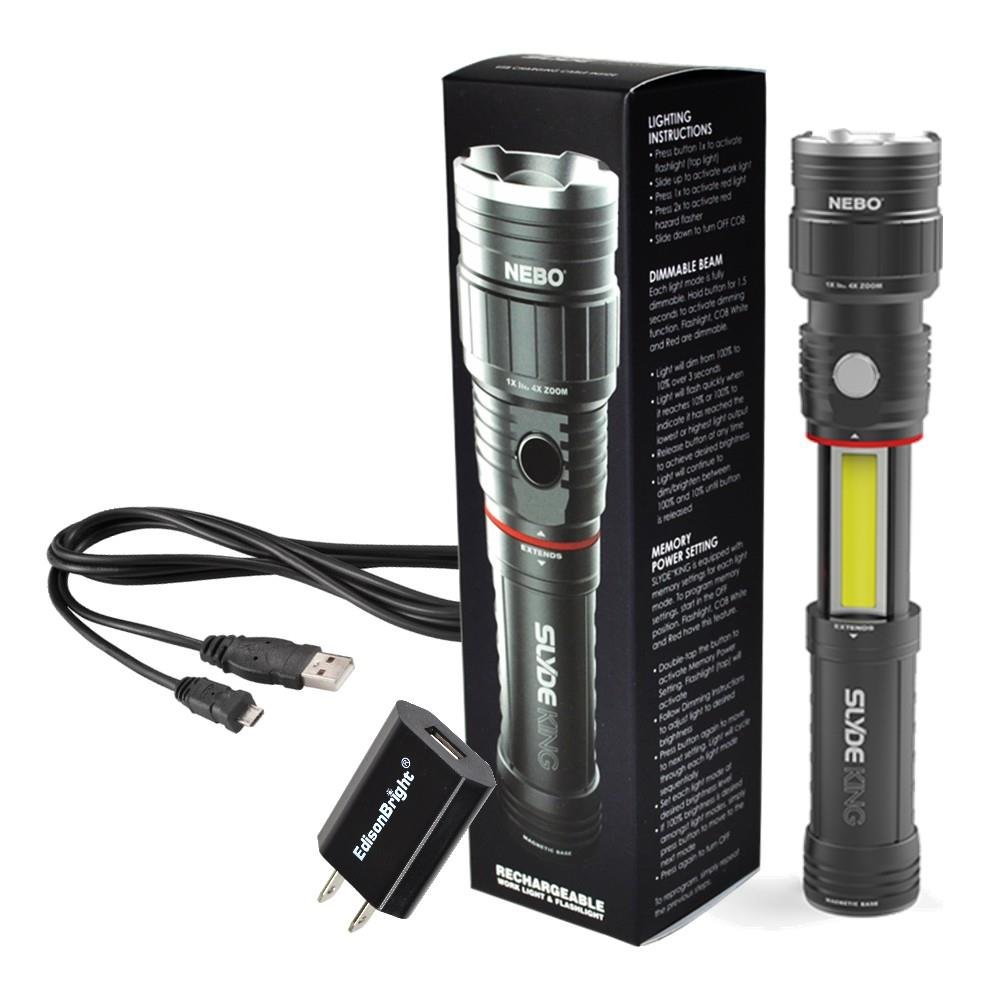

Nebo #6434
Slyde King
330 Lumen
LED flashlight/Worklight,
LitezAll
Promier
330 Lumen
Sunday, July 21, 2019
NEW BEGINNINGS
As you can see I haven't posted anything in almost three years. The main reason is my computer died and it was nine months before I had a new one. I've a new iPad and new phone but these devices are too small for me to post from. I even have a new card to give out so others can get information about living with low vision. The one lesson I've learned is my vision and eye health could be much worse.
Please check out and follow my new Instagram, Facebook, and Blog.


Please check out and follow my new Instagram, Facebook, and Blog.
Monday, October 24, 2016
LEFT AND RIGHT EARPHONE
I've used headphone everyday for about 15 year but I just recently noticed a neat trick. I listen to books on tape every night, most of the time I've cut off all the light before putting them in my ear. I noticed a nub or dot on only one earphone. I turned the light on and noticed it was the left ear. Well I only listen on one side....the left. How cool is this. I use the type in the picture. Not all sets have this identifying "dot". For someone with poor vision I'm always looking for things to make life easier by using my sense of touch instead of relying on my vision.
Sunday, March 29, 2015
CELL PHONE UNDATED FROM SAMSUNG
My Easy Mode Screen

My New Note 3 Updates
Screen as of March 29, 2015

Monday, November 10, 2014
BUTTERBALL TURKEY BREAST AND COOKING FOR THE HOILDAYS
I thought I would re-port my Butterball Turkey Breast since I can't mess this up. A few weeks ago my husband came home to find a smokey kitchen and a pan of burnt ground beef. I got sidetracked trying to find a battery for my timer. My lesson, never leave the kitchen while cooking. I didn't hear the meat cooking but I did hear the BUZZ of the smoke detector. I wish I would have taken a picture of the pan. As they say it was priceless. I think I'll let my husband cook from now on.
I don't cook much at all but one thing I like to cook is Butterball turkey breast. I've served them to my family for about eight years. I remember buying the breast with bone in and it was more than I wanted to deal with. Most of the time I pull the netting off and cook it frozen. Yesterday I cooked it thawed with the netting which stuck to the skin. I thought this isn't good for us with low vision so I called Butterball and they were very helpful. The woman I talked to said she cooks this often. She suggested pulling the netting away from the thawed meat to it won't stick and putting oil and seasoning on it. I'm going to try that method next time. The way I roast it is with olive oil and Shapley's seasoning with is a local seasoning from Mississippi. This is an affordable meal at $10 for the turkey. I've listed their instructions below with their contact information.
Thaw in Refrigerator (not at room temperature)
- Place unopened roast on a tray in refrigerator for 1 1/2 to 2 days, or until thawed.
- To thaw more quickly, place unopened roast in cold tap water for 3 to 5 hours. Change water every 30 minutes to keep turkey cold.
- When thawed, keep in refrigerator until ready to cook.
Prepare Roast
- Remove clear plastic netting and package. Refrigerate gravy packet until ready to use. Leave string netting on roast. Drain juices and lightly pat with paper towels.
- Lift string netting and shift position on roast to make removal easier after cooking.
- Cover roast with no-stick cooking spray. Additional basting is not necessary.
Slow-Cooker Instructions:
- Place THAWED roast, skin side up, flat in 8” diameter slow-cooker.
- Add 1/2 cup water.
- Cover, cook on low 7-1/2 hours to internal temperature of 170 degrees as measured with a meat thermometer.
- After 4 hours, check temperature at center, ends and near top for food safety. Turkey must reach 140 degrees within 4 hours.
- Place THAWED roast in microwave on a shallow microwave-safe tray.
- Microwave at 30% power for 30 minutes, turn roast over. Microwave an additional 20 – 30 minutes on 30% power.
- Remove from oven, wrap in foil, let stand 10 minutes.
- Check for doneness with a meat thermometer. Temperature in center of roast should be 165 – 170 degrees. If roast is not done, continue cooking on 30% power checking temperature every 5 minutes.
- Remove netting and slice.
1-800-BUTTERBALL (800-288-8372)
Weekdays from 10 a.m. to 7 p.m. CST (Central Standard Time)
Monday, October 27, 2014
GLARE CONTROL
I have to wear sunglasses even on sunny days. Read below about protecting your vision with outdoors.
Photophobia or extreme sensitivity to
light and glare can be a severe problem for many low vision patients.
Many eye diseases create intraocular light scatter that can
significantly reduce effective vision. The eyes become hypersensitive to
what the normal eye sees only as moderate glare. The shorter
wavelength, high-energy part of the visible spectrum dominates daylight
and is a contributor to glare. Glare can be a problem both indoors and
outdoors.
Patients complain of intense light sensitivity and hazy vision. Visual function is impaired by glare and loss of contrast. To effectively improve a person’s vision, problems with glare need to be addressed when glasses or other low vision ads are prescribed. Special tints will also increase contrast sense which will also increase visual acuity.
There are a large variety of tints or filters with varying degrees of light transmission and contrast enhancement. The glasses can be pre-made to be worn alone or over the patient's current eyeglasses. They can also be custom-made with the patients prescription. Wellness Protection Eyewear, Polaroid lenses, Corning Glare Control Lenses, Drivewear lenses, ultra-violet (UV) coatings, anti-reflective coatings and pinhole contact lenses will all help a patient become more comfortable both indoors and outdoors. Light sensitive patient should also consider wearing frames with side shields along with hats and visors.
During your eye examination, your ViewFinder Eye Doctor will evaluate your glare sensitivity in different situations and prescribe the appropriate tint to maximize your vision and increase your comfort.
Patients complain of intense light sensitivity and hazy vision. Visual function is impaired by glare and loss of contrast. To effectively improve a person’s vision, problems with glare need to be addressed when glasses or other low vision ads are prescribed. Special tints will also increase contrast sense which will also increase visual acuity.
There are a large variety of tints or filters with varying degrees of light transmission and contrast enhancement. The glasses can be pre-made to be worn alone or over the patient's current eyeglasses. They can also be custom-made with the patients prescription. Wellness Protection Eyewear, Polaroid lenses, Corning Glare Control Lenses, Drivewear lenses, ultra-violet (UV) coatings, anti-reflective coatings and pinhole contact lenses will all help a patient become more comfortable both indoors and outdoors. Light sensitive patient should also consider wearing frames with side shields along with hats and visors.
During your eye examination, your ViewFinder Eye Doctor will evaluate your glare sensitivity in different situations and prescribe the appropriate tint to maximize your vision and increase your comfort.
From Viewfinder
http://www.viewfinderlowvision.com/index.php?page=glare-control
Wednesday, October 22, 2014
EASY WAYS TO IMPROVE YOUR VISION
Healthy eating also helps your eyes. With so many diabetics with eye problems it's essential to live a healthy lifestyle.
Easy Ways to Improve Your Visionfrom Stealth Health
Easy Ways to Improve Your Visionfrom Stealth Health
They are two of your most precious possessions, but chances are, you take your eyes for granted. Most of us do. But think for a second what life would be like without being able to gaze on your grandchild or your flower garden or even navigate the kitchen without incident.
http://www.rd.com/health/eye-health-easy-ways-to-improve-your-vision/
Prevent Blindness America, a nonprofit organization dedicated to vision issues, estimates that 50,000 people lose their sight needlessly every year and that 80 million Americans are at risk of eye diseases that can lead to low vision and even blindness.
The good news: The most common diseases — age-related macular degeneration (ARMD), cataracts, glaucoma, and dry eye disease — are all preventable to some extent. Read on to see (pun intended) how you can get Stealth Healthy protection for your peepers. Before we go any further, we have to tell you that the first step, if you smoke, is to stop. Smoking increases your risk of cataracts, glaucoma, dry eyes, and age-related macular degeneration.
1. Mix a cup of blueberries with a cup of yogurt for breakfast this morning. Blueberries are one of the richest fruit forms of antioxidants, and a study published in The Archives of Ophthalmology found that women and men who ate the greatest amount of fruit were the least likely to develop age-related macular degeneration (ARMD), the leading cause of blindness in older people.
2. Spread bilberry jam on your morning toast. Or take a bilberry supplement every morning. The berries contain compounds called anthocyanosides, which may protect the retina against macular degeneration.
3. Have spinach twice a week. Could be a spinach quiche, steamed spinach, or maybe Tuscan spinach — sautéed in some olive oil with garlic and raisins. Regardless, be sure to get your spinach. Studies find that lutein, a nutrient that is particularly abundant in spinach, may prevent age-related macular degeneration and cataracts. Ideally, get your lutein in combination with some form of fat (olive oil works great) for the best absorption.
4. Cook with red onions, not yellow. Red onions contain far more quercetin, an antioxidant that is thought to protect against cataracts.
5. Aim your car vents at your feet — not your eyes. Dry, air-conditioned air will suck the moisture out of eyes like a sponge. Aim the vents in your car away from your eyes, or wear sunglasses as a shield. Dry eyes can be more than an inconvenience; serious dryness can lead to corneal abrasions and even blindness if left untreated.
6. Move your computer screen to just below eye level. Your eyes will close slightly when you’re staring at the computer, minimizing fluid evaporation and the risk of dry eye syndrome, says John Sheppard, M.D., who directs the ophthalmology residency program at Eastern Virginia Medical School in Norfolk, Virginia.
7. Take a multivitamin every day. Make it a habit, like brushing your teeth. A major study suggested that if every American at risk for age-related macular degeneration took daily supplements of antioxidant vitamins and zinc, more than 300,000 people could avoid ARMD-associated vision loss over the next five years. Other studies find that women who took vitamin C supplements for at least 10 years were 77 percent less likely to show initial signs of cataracts than those who took no supplemental C. So take a multi with at least 150 mg vitamin C, or take a separate C supplement.
8. Walk at least four times a week. Some evidence suggests that regular exercise can reduce the intraocular pressure, or IOP, in people with glaucoma. In one study, glaucoma patients who walked briskly four times per week for 40 minutes lowered their IOP enough so they could stop taking medication for their condition. It’s also possible — although there’s no proof yet — that walking could also reduce your overall risk of developing glaucoma.
9. Eat fish twice a week. A study from Harvard researchers presented at the 2003 Association for Research in Vision and Ophthalmology’s annual meeting evaluated the diets of 32,470 women and found those who ate the least amount of fish (thus getting the least amount of omega-3 fatty acids) had the highest risk of dry eye syndrome. Even tuna fish (yes, the kind that comes in a can) protected against the syndrome. If you can’t stand fish, or are worried about mercury consumption, try fish-oil supplements to get your omega-3s.
10. Twice a week, walk away from greasy or sweet snacks. A 2001 study found that people whose diets were high in omega-3 fatty acids and low in omega-6 fatty acids (found in many fat-filled snack foods like commercially prepared pie, cake, cookies, and potato chips) were significantly less likely to develop ARMD than those whose diets were high in omega-6 fatty acids and low in omega-3 fatty acids. In fact, if your diet was high in omega-6 at all — even if you still ate plenty of fish — the protective effects of the omega-3 fatty acids disappeared.
11. Have sweet potatoes for dinner tonight. Since they are rich in vitamin A, these sweet spuds can help improve your night vision.
12. Turn down the heat in your house. Heat dries out the air, which, in turn, dries out your eyes. In the winter, you might also try adding some humidity with a humidifier or even bunching a lot of plants together in the room in which you spend the most time.
http://www.rd.com/health/eye-health-easy-ways-to-improve-your-vision/
Prevent Blindness America, a nonprofit organization dedicated to vision issues, estimates that 50,000 people lose their sight needlessly every year and that 80 million Americans are at risk of eye diseases that can lead to low vision and even blindness.
The good news: The most common diseases — age-related macular degeneration (ARMD), cataracts, glaucoma, and dry eye disease — are all preventable to some extent. Read on to see (pun intended) how you can get Stealth Healthy protection for your peepers. Before we go any further, we have to tell you that the first step, if you smoke, is to stop. Smoking increases your risk of cataracts, glaucoma, dry eyes, and age-related macular degeneration.
1. Mix a cup of blueberries with a cup of yogurt for breakfast this morning. Blueberries are one of the richest fruit forms of antioxidants, and a study published in The Archives of Ophthalmology found that women and men who ate the greatest amount of fruit were the least likely to develop age-related macular degeneration (ARMD), the leading cause of blindness in older people.
2. Spread bilberry jam on your morning toast. Or take a bilberry supplement every morning. The berries contain compounds called anthocyanosides, which may protect the retina against macular degeneration.
3. Have spinach twice a week. Could be a spinach quiche, steamed spinach, or maybe Tuscan spinach — sautéed in some olive oil with garlic and raisins. Regardless, be sure to get your spinach. Studies find that lutein, a nutrient that is particularly abundant in spinach, may prevent age-related macular degeneration and cataracts. Ideally, get your lutein in combination with some form of fat (olive oil works great) for the best absorption.
4. Cook with red onions, not yellow. Red onions contain far more quercetin, an antioxidant that is thought to protect against cataracts.
5. Aim your car vents at your feet — not your eyes. Dry, air-conditioned air will suck the moisture out of eyes like a sponge. Aim the vents in your car away from your eyes, or wear sunglasses as a shield. Dry eyes can be more than an inconvenience; serious dryness can lead to corneal abrasions and even blindness if left untreated.
6. Move your computer screen to just below eye level. Your eyes will close slightly when you’re staring at the computer, minimizing fluid evaporation and the risk of dry eye syndrome, says John Sheppard, M.D., who directs the ophthalmology residency program at Eastern Virginia Medical School in Norfolk, Virginia.
7. Take a multivitamin every day. Make it a habit, like brushing your teeth. A major study suggested that if every American at risk for age-related macular degeneration took daily supplements of antioxidant vitamins and zinc, more than 300,000 people could avoid ARMD-associated vision loss over the next five years. Other studies find that women who took vitamin C supplements for at least 10 years were 77 percent less likely to show initial signs of cataracts than those who took no supplemental C. So take a multi with at least 150 mg vitamin C, or take a separate C supplement.
8. Walk at least four times a week. Some evidence suggests that regular exercise can reduce the intraocular pressure, or IOP, in people with glaucoma. In one study, glaucoma patients who walked briskly four times per week for 40 minutes lowered their IOP enough so they could stop taking medication for their condition. It’s also possible — although there’s no proof yet — that walking could also reduce your overall risk of developing glaucoma.
9. Eat fish twice a week. A study from Harvard researchers presented at the 2003 Association for Research in Vision and Ophthalmology’s annual meeting evaluated the diets of 32,470 women and found those who ate the least amount of fish (thus getting the least amount of omega-3 fatty acids) had the highest risk of dry eye syndrome. Even tuna fish (yes, the kind that comes in a can) protected against the syndrome. If you can’t stand fish, or are worried about mercury consumption, try fish-oil supplements to get your omega-3s.
10. Twice a week, walk away from greasy or sweet snacks. A 2001 study found that people whose diets were high in omega-3 fatty acids and low in omega-6 fatty acids (found in many fat-filled snack foods like commercially prepared pie, cake, cookies, and potato chips) were significantly less likely to develop ARMD than those whose diets were high in omega-6 fatty acids and low in omega-3 fatty acids. In fact, if your diet was high in omega-6 at all — even if you still ate plenty of fish — the protective effects of the omega-3 fatty acids disappeared.
11. Have sweet potatoes for dinner tonight. Since they are rich in vitamin A, these sweet spuds can help improve your night vision.
12. Turn down the heat in your house. Heat dries out the air, which, in turn, dries out your eyes. In the winter, you might also try adding some humidity with a humidifier or even bunching a lot of plants together in the room in which you spend the most time.
Tuesday, September 9, 2014
MY OCULARIST TAL COX HELPING OTHERS
Yesterday my husband and is drove to Alpharetta, Georgia to TAL Cox my ocularist. Tal has help other like me feel and look more normal by fitting us with prosthetic artificial eyes. Learn about a girl in Honduras.
http://youtu.be/v4sqAT6AmWk
http://youtu.be/v4sqAT6AmWk
Monday, July 21, 2014
AMERICAN PRINTING HOUSE FOR THE BLIND

The American Printing House for the Blind is a great resource. The have produces for sale until September 30, 2014.
http://www.aph.org/products/sizzle.html
Monday, June 23, 2014
ALBINISM AND NOAH WEBSITE

Vision Problems
People with albinism always have problems with vision (not correctable with eyeglasses) and many have low vision. The degree of vision impairment varies with the different types of albinism and many people with albinism are “legally blind,” but most use their vision for many tasks including reading and do not use Braille. Some people with albinism have sufficient vision to drive a car. Vision problems in albinism result from abnormal development of the retina and abnormal patterns of nerve connections between the eye and the brain. It is the presence of these eye problems that defines the diagnosis of albinism. Therefore the main test for albinism is simply an eye examination.
NOAH
The National Organization for Albinism and Hypopigmentation
PO Box 959, East Hampstead, NH 03826-0959
Phone: 800 473-2310 (US and Canada)
 Phone: 603 887-2310 Fax: 800-648-2310
http://www.albinism.org
If you have any questions or comments, please e-mail us at webmaster@albinism.org
NOAH is a volunteer organization for persons and families involved with the condition of albinism. It does not diagnose, treat, or provide genetic counseling. It is involved in self-help, while trying to promote research and education.
Thursday, June 19, 2014
What Causes Low Vision
What causes Low Vision? Low vision can be caused by a
variety of things from disease to injury. A short list of some of the
most common causes are below.
• Macular Degeneration
• Glaucoma
• Diabetic Retinopathy
• Eye Injuries
• Brain Tumors
• Stroke
• Brain Injuries
• Inoperable Cataract
• Corneal Degeneration
• Optic Atrophy
variety of things from disease to injury. A short list of some of the
most common causes are below.
• Macular Degeneration
• Glaucoma
• Diabetic Retinopathy
• Eye Injuries
• Brain Tumors
• Stroke
• Brain Injuries
• Inoperable Cataract
• Corneal Degeneration
• Optic Atrophy
Wednesday, June 18, 2014
LOW VISION GLASSES
LOS ANGELES (KABC) --
Thirteen-million Americans over the age of 45 suffer from some type
of "low vision." That includes those who've lost their sight due to
diabetes, macular degeneration or glaucoma. But low vision can affect
younger people too. Now there's a new high-tech pair of glasses helping
young students keep up in class.Last year, Dr. Adam Esbenshade diagnosed Alexis London with an inoperable brain tumor along her optic pathway.
"If we're not able to stop the growth of this tumor, it will be a life-threatening situation," said Esbenshade.
Alexis's mom says a year's worth of chemotherapy stopped the growth, but it hasn't been easy.
"Chemo was a really hard road. And watching her lose her eyesight," she said.
"My sight is pretty much like 20 percent in this eye and pretty much blind in that eye," said Alexis.
Now new technology is giving Alexis hope. A special pair of glasses that allows Alexis to do her homework without a magnifying glass.
"It's a lot easier too than making it big and everything. I can actually read the small print," said Alexis.
Dr. Jeffrey Sonsino created the illuminated Low Vision Readers. LED lights and prism correction help people who aren't helped by traditional lenses.
"This came about because we couldn't get people reading the way we wanted them to," said Sonsino.
For Alexis, it's a reason to cheer.
The Low Vision Readers cost less than $400 and allow Alexis to return to using textbooks at school instead of highly enlarged text on her iPad.
JOHN DOOLEY AND HIS DETACHED RETINA

Detached retina had Arlington Park track announcer John Dooley worried
Arlington Park track announcer John Dooley, who had surgery to repair a detached retina earlier this year, works the booth on Friday, June 17, 2011 in Arlington Heights. | Richard A. Chapman~Sun-Times
John Dooley used social media to tell the world about his health problems.
The track announcer at Arlington Park had just awakened from surgery to repair a detached retina when he went on Twitter and wrote that he had the surgery at Skokie Hospital. Dooley tweeted the news before he even told his boss, Kevin Clarke, the director of operations at Arlington.
‘‘I tweeted, ‘Wow, my first surgery, leaving Skokie Hospital after my detached retina surgery.’ And it let everyone know,’’ Dooley said.
Dooley, 45, called Clarke after sending out the tweet and can laugh about it now. But at the end of March, he was in shock and disbelief. Dooley’s livelihood is based on being able to see, so if his vision was in jeopardy, so were his chances of returning to work for the Arlington season, which began May 6.
Besides calling the races at Arlington, Dooley spends the winters doing the same at the Fair Grounds in New Orleans. When the Fair Grounds’ season ended March 27, Dooley was preparing for the 15-hour drive home to the Chicago area. At the end of that week, he was planning to take a vacation to Ukraine.
Dooley began his drive home about 4:30 a.m. March 28. About halfway through, he noticed a dark halo in the left corner of his right eye.
‘‘I was chalking it up to tiredness,’’ said Dooley, who has been calling races for 20 years. ‘‘But the next day I stayed home, and then . . . I went to get a year’s supply of contact lenses,’’ Dooley said. ‘‘Instead, the doctor came in and said I needed to see an ophthalmologist that day.’’
Dooley went to see Dr. Zac Ravage, an ophthalmologist at the Illinois Retina Associates, who diagnosed him with a detached retina. Ravage ordered Dooley to have surgery that night at Skokie Hospital.
‘‘The next thing I know, I’m signing these papers and I’m in pre-op,’’ Dooley said. ‘‘It happened the day after the Fair Grounds meet ended, five weeks before Arlington opened and the day before I was supposed to go to Kiev. I didn’t have time to dwell on, ‘What if all this goes terribly wrong?’ ’’
Ravage said detached retinas usually occur in nearsighted people and are something that ‘‘just happens.’’ Ravage said Dooley would have lost half his vision had he waited to seek treatment.
The surgery took about two hours. Ravage said a silicone band was put around the eye to hold the retina in place.
‘‘He was eager to return to work,’’ Ravage said. ‘‘He was composed about it, but it is a lot for anyone to grasp.’’
Dooley didn’t have to do any physical therapy after the surgery, but he did wear an eye patch. His vision was good enough for him to return to Arlington in time for Opening Day in May.
‘‘I just wanted to get through the nine-race program, make no mistakes and go have a cold [beer],’’ Dooley said. ‘‘It was getting back to really using my eyes again. It had only been four weeks since my surgery.’’
Ravage said there’s always a chance the retina might not want to reattach itself after surgery and that one surgery might not be sufficient for some patients. But Dooley said he feels like he’s back to normal, even though he still is trying to get used to wearing glasses while he works.
‘‘I’ve never called [a race] with glasses until Opening Day at Arlington this May,’’ Dooley said. ‘‘But it’s really hard to call a race with glasses. It falls under the category of trying to teach an old dog new tricks. It really is a different world calling races with glasses on.’’
SAFE ROADS FOR PEFESTRIAMS
Ever wonder why newer hybred car are noisy? I found an article in 2010 to explain the logic behind the underlying problem, your safety.
Safer Roads for Pedestrians
Our organizations representing the automobile industry and blind Americans are pushing to establish minimum noise levels for cars. The Alliance of Automobile Manufacturers (AAM), the Association
of International Automobile Manufacturers (AIAM), the National Federation of the Blind (NFB), and the American Council of the Blind (ACB) are urging the U.S. Congress to include the provision as part of the Motor Vehicle Safety Act of 2010. Initially promoted
by the NFB and ACB, the safety issue has garnered active support from the auto industry. nearly silent operation of the newer hybrid
electric cars is dangerous not only to blind pedestrians but also to bicyclists, runners, and small children. A recent report released by the National Highway Traffic Safety Administration observed that hybrid and electric vehicles are nearly twice as likely to be involved in pedestrian related accidents as most cars and trucks. The
congressional bill is known as HR734 and is titled The Pedestrian Safety Enhancement Act.
Lifeglow
Safer Roads for Pedestrians
Our organizations representing the automobile industry and blind Americans are pushing to establish minimum noise levels for cars. The Alliance of Automobile Manufacturers (AAM), the Association
of International Automobile Manufacturers (AIAM), the National Federation of the Blind (NFB), and the American Council of the Blind (ACB) are urging the U.S. Congress to include the provision as part of the Motor Vehicle Safety Act of 2010. Initially promoted
by the NFB and ACB, the safety issue has garnered active support from the auto industry. nearly silent operation of the newer hybrid
electric cars is dangerous not only to blind pedestrians but also to bicyclists, runners, and small children. A recent report released by the National Highway Traffic Safety Administration observed that hybrid and electric vehicles are nearly twice as likely to be involved in pedestrian related accidents as most cars and trucks. The
congressional bill is known as HR734 and is titled The Pedestrian Safety Enhancement Act.
Lifeglow
July - August 2010, Vol. 27, No 4
Meeting Life’s Challenges, LLC
Meeting Life’s Challenges, LLC
Making Life EasierTM for people with chronic illness (and everyone else too!)
9042 Aspen Grove Lane, Madison, WI 53717 ph 608-824-0402
The Accessible Home: 10 Blind and Low Vision Tips
Every seven minutes, someone in America will become blind or visually impaired. By 2030, the estimated number of visually impaired Americans 65 and older will double to seven million. Vision impairment can result in the loss of independence. Here are a few tips that will make living in your home easier if you or someone you love is blind or visually impaired.
Increase Size
• Use large and bold print reading materials, even game boards and playing cards.
• Use magnifiers — everything from a simple magnifying glass to high-tech digital readers — to enhance your vision. A low vision specialist can help you determine the best magnifier for you.
• Use large print, high contrast computer keyboards, calculators,
telephones, and remote controls.
More tips to follow.
Making Life EasierTM for people with chronic illness (and everyone else too!)
9042 Aspen Grove Lane, Madison, WI 53717 ph 608-824-0402
The Accessible Home: 10 Blind and Low Vision Tips
Every seven minutes, someone in America will become blind or visually impaired. By 2030, the estimated number of visually impaired Americans 65 and older will double to seven million. Vision impairment can result in the loss of independence. Here are a few tips that will make living in your home easier if you or someone you love is blind or visually impaired.
Increase Size
• Use large and bold print reading materials, even game boards and playing cards.
• Use magnifiers — everything from a simple magnifying glass to high-tech digital readers — to enhance your vision. A low vision specialist can help you determine the best magnifier for you.
• Use large print, high contrast computer keyboards, calculators,
telephones, and remote controls.
More tips to follow.
Monday, June 16, 2014
LARGE PRINT CALENDER AND PLANNER
It's hard to find a calender I can use for work. My Ipad calender is great but I always write my appointments in a calender. I found this one by searching Large print weekly planner. The numbers and lines are easy to read as the name implies - See It Bigger.
Plan Ahead See It Bigger 18 Month Planner, July 2014 - December 2015, Assorted Colors, Color May Vary


- 3 year reference calendar
- monthly laminated tabs
- monthly and weekly format
- Customer will receive one Planner in any of the following colors: Assorted design colors: Berry, Blue, Black. Color is random and cannot be chosen at this time.
Friday, June 13, 2014
WARNING SIGNS OF LOW VISION
Here are warning signs of low vision:
- Having trouble recognizing friends' and relatives' faces.
- Having problems performing tasks that require you to see things up close, including sewing, reading or cooking.
- Having difficulty matching clothing or distinguishing colors.
- Having trouble around the house because the lights don't seem as bright as they once were.
- Having difficulty reading road and street signs or store-front signs.
Monday, June 2, 2014
MY FAVORITE PENS
Pilot® G-2 Retractable Gel-Ink Pens
Bold point, 1.0 mm Varsity of colors.
Smooth writing gel-ink is water resistant and smear-proof. Contoured rubber grip conforms to your writing grasp for maximum comfort.
Acid free for documenting and record keeping.

AT&T Mobility

Subscribe to:
Posts (Atom)


